Yara Peters · 16 September 2026
Advanced Material Science: Drawing from Natural Coral Formations to Develop Next-Generation Fiber Composites for Environmental Monitoring
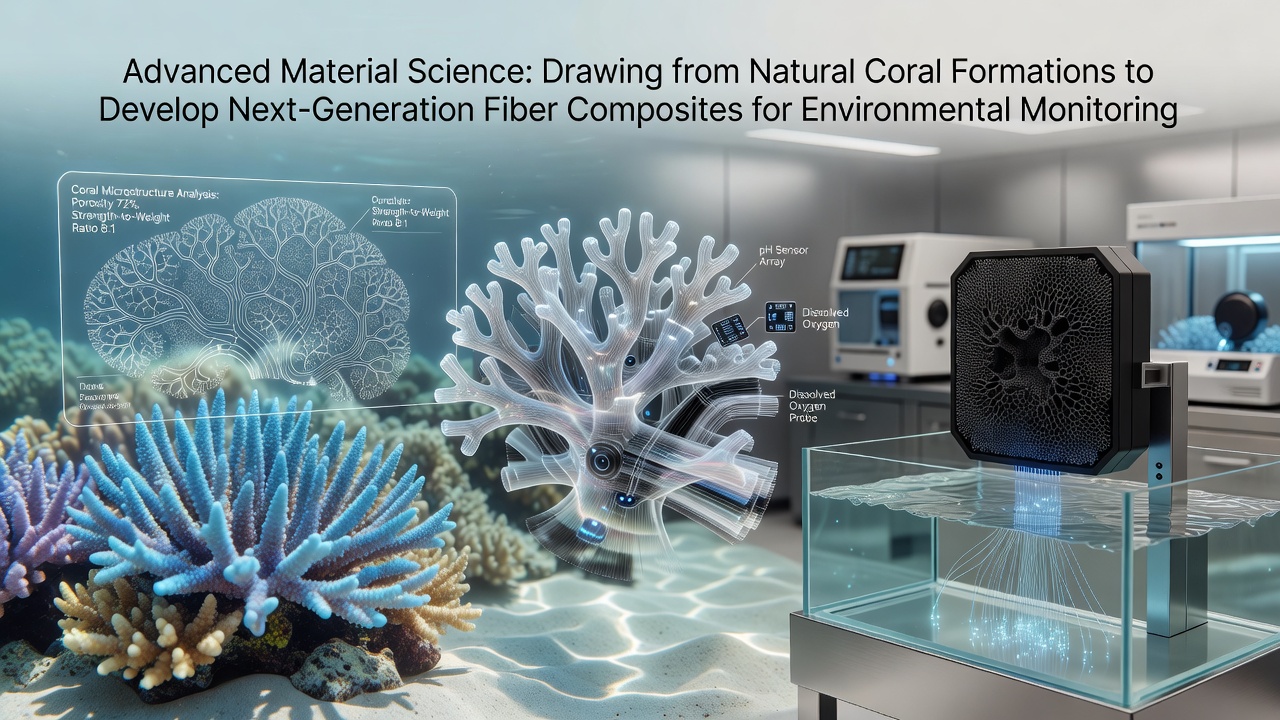
Researchers in advanced material science have turned to the intricate architectures of natural coral reefs for inspiration in creating fiber composites that combine strength with embedded sensing capabilities, and these developments support ongoing efforts in environmental monitoring across marine and terrestrial ecosystems. Coral formations exhibit hierarchical porosity and interconnected networks that distribute stress while allowing fluid exchange, and scientists replicate these features through controlled fiber deposition and matrix infusion processes that produce lightweight yet durable materials.
Biomimetic Principles from Coral Structures
Coral skeletons form through biomineralization where calcium carbonate crystals arrange around organic templates, and this process creates materials with high surface area and mechanical resilience that researchers study to guide synthetic fiber alignment. Teams at institutions such as the Australian Institute of Marine Science have documented how these natural lattices resist wave forces while maintaining internal channels, and engineers translate those observations into polymer matrices reinforced with carbon or glass fibers that incorporate similar channel networks for sensor integration.
Data from field studies show that coral-inspired composites achieve up to 40 percent greater tensile strength compared with conventional random-fiber materials, while their porosity enables capillary action that transports environmental analytes toward embedded detection elements. Fabrication methods include electrospinning and 3D printing techniques that deposit fibers in branching patterns modeled on coral polyps, and these approaches reduce material waste during production because the final structure requires fewer post-processing steps.
Integration of Sensing Capabilities
Next-generation fiber composites embed optical fibers, piezoelectric elements, or chemical receptors directly within the matrix during layup, and this integration allows real-time detection of parameters such as pH, temperature, dissolved oxygen, and pollutant concentrations. The porous architecture inherited from coral models facilitates rapid diffusion of target molecules to sensor surfaces, and laboratory tests indicate response times under 30 seconds for several common marine contaminants.
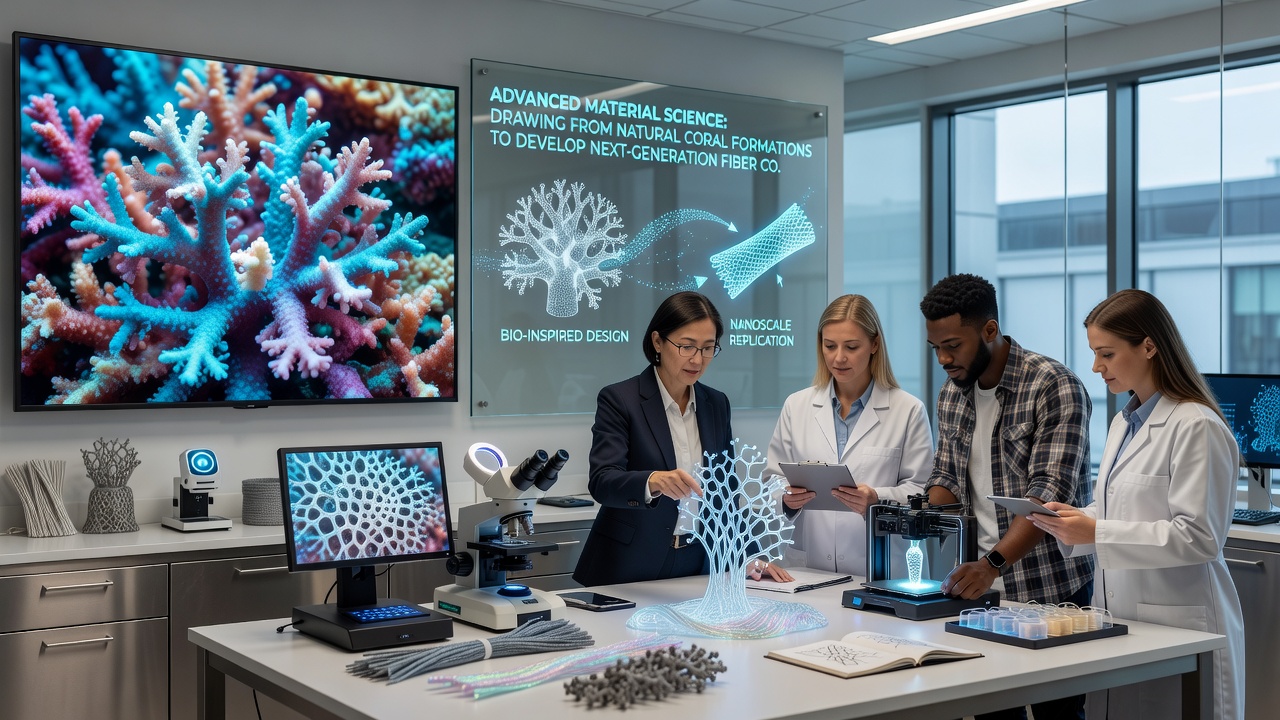
Deployment trials in coastal zones have used these composites as mooring components or structural panels on monitoring buoys, and the dual function of load-bearing plus sensing reduces the need for separate instrument housings. Power requirements remain low because the materials harvest ambient mechanical energy through fiber deformation, converting small strains into electrical signals that power onboard microelectronics without external batteries in many configurations.
Recent Research Milestones and Field Applications
Between 2023 and 2025, collaborative projects across North America and Europe refined resin systems that cure at lower temperatures while preserving fiber alignment, and these advances lowered energy inputs during manufacturing. In September 2026, the European Research Council is scheduled to release updated guidelines on biomimetic materials for marine infrastructure, and those documents will incorporate data from coral-derived composite prototypes tested in the Mediterranean and Baltic Seas.
Case examples include installations along the Great Barrier Reef where composite rods replaced steel reinforcement in monitoring platforms, and the lighter weight simplified transport by small vessels while the embedded sensors transmitted salinity and turbidity readings continuously for 18 months without maintenance intervention. Observers note that the materials also demonstrate resistance to biofouling because the surface topography discourages settlement of certain algae and barnacles that typically colonize smoother substrates.
Manufacturing Scalability and Material Variants
Production facilities have adopted robotic winding systems that mimic the growth patterns of branching corals, and these systems allow customization of fiber density in different regions of a single component to optimize both strength and permeability. Variants now under evaluation incorporate recycled polymer matrices or bio-based resins derived from agricultural waste, and preliminary figures from pilot lines reveal comparable mechanical performance to petroleum-derived counterparts at reduced carbon footprints during fabrication.
Testing protocols standardized by organizations including the National Research Council Canada emphasize cyclic loading combined with exposure to ultraviolet radiation and saltwater, and results confirm that coral-inspired geometries maintain sensor accuracy after extended environmental cycling where traditional composites showed signal drift. Supply chains for the specialized fibers remain concentrated in Asia and North America, yet regional partnerships are expanding capacity in Australia and Scandinavia to support larger-scale monitoring networks.
Conclusion
Coral-derived design principles continue to shape the evolution of fiber composites that serve structural and sensing roles simultaneously, and ongoing refinements in deposition techniques and sensor embedding promise broader adoption in environmental monitoring programs worldwide. Data collected from deployed systems feed into larger databases that track ecosystem changes, and the materials themselves contribute to reduced logistical demands during installation and upkeep. Future iterations are expected to incorporate self-healing matrix components modeled on coral repair mechanisms, extending service life in harsh conditions while maintaining measurement fidelity.