Klara Simmons · 30 September 2026
Reef Architectures Quietly Shaping High-Performance Threads for Tracking Subtle Shifts in Marine Chemistry Networks
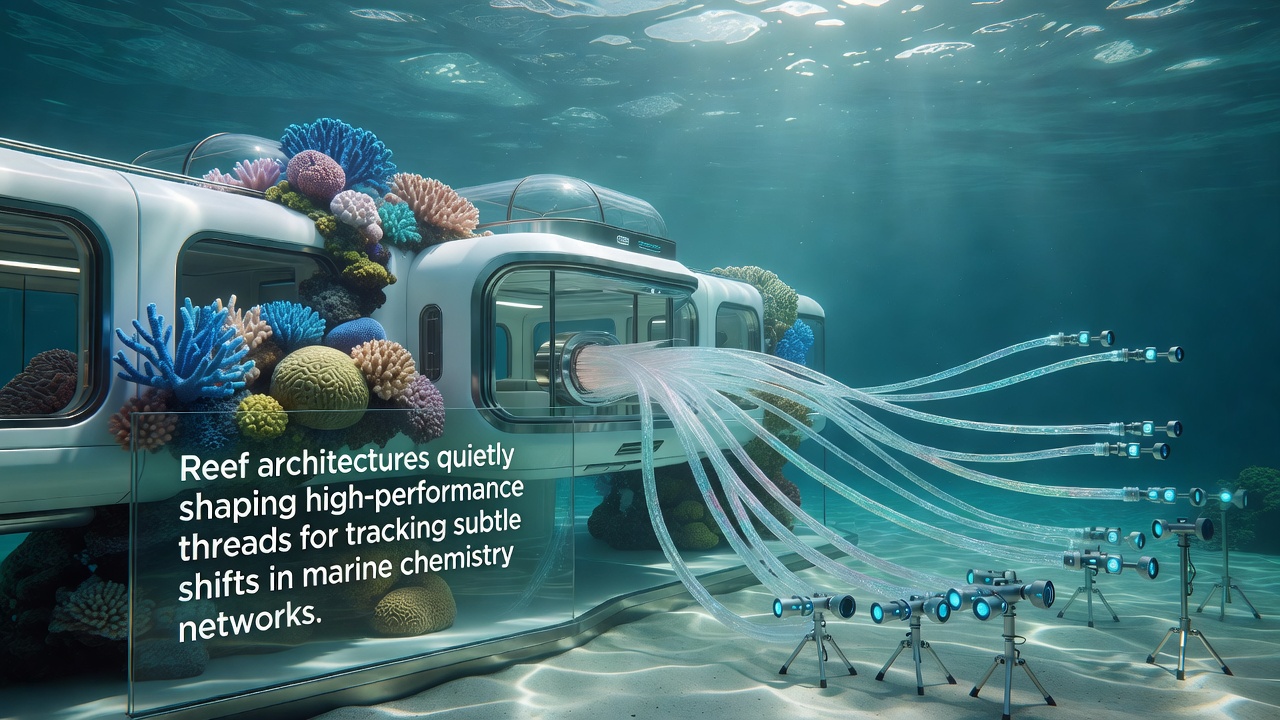
Reef architectures draw from the structural complexity of natural coral formations to create frameworks that support high-performance threads, and these threads function as distributed sensors capable of detecting minute changes in ocean chemistry parameters such as pH levels, dissolved oxygen, and carbonate concentrations. Researchers have integrated these designs into monitoring systems where the branching patterns of reefs guide the placement of conductive and optical fibers, allowing data collection across wide areas without centralized hardware bottlenecks. Data from field deployments show that such configurations reduce signal interference while maintaining thread integrity under variable currents and pressures.
Structural Principles Behind Reef-Inspired Thread Networks
Engineers replicate the porous, interconnected matrices found in coral colonies when laying out thread pathways, and this approach creates redundant routes for data transmission that continue operating even if individual segments encounter damage or biofouling. Studies conducted by marine technology teams indicate that the fractal-like branching increases surface area for sensor nodes, which in turn improves spatial resolution when tracking chemical gradients over time. Threads embedded within these architectures often combine polymer coatings with nanoscale transducers, enabling simultaneous measurement of multiple variables while resisting corrosion in saline environments.
Placement strategies follow observed reef growth patterns where main trunks support lateral branches, and this layout distributes mechanical loads across the network so that high-performance threads experience less strain during storms or tidal shifts. Observers note that simulation models based on these geometries predict higher uptime rates compared with linear or grid-based arrangements commonly used in earlier sensor arrays.
Applications in Detecting Marine Chemistry Variations
High-performance threads configured through reef architectures feed continuous streams of data into processing units that identify early indicators of acidification or nutrient loading, and government agencies such as the National Oceanic and Atmospheric Administration have incorporated similar biomimetic designs into regional observation programs. Threads positioned at varying depths capture vertical profiles of chemistry shifts that standard buoys often miss, while the overall structure minimizes drag and entanglement with marine life. Figures from multi-year trials reveal detection thresholds for pH changes as small as 0.01 units, supporting more precise modeling of ecosystem responses.
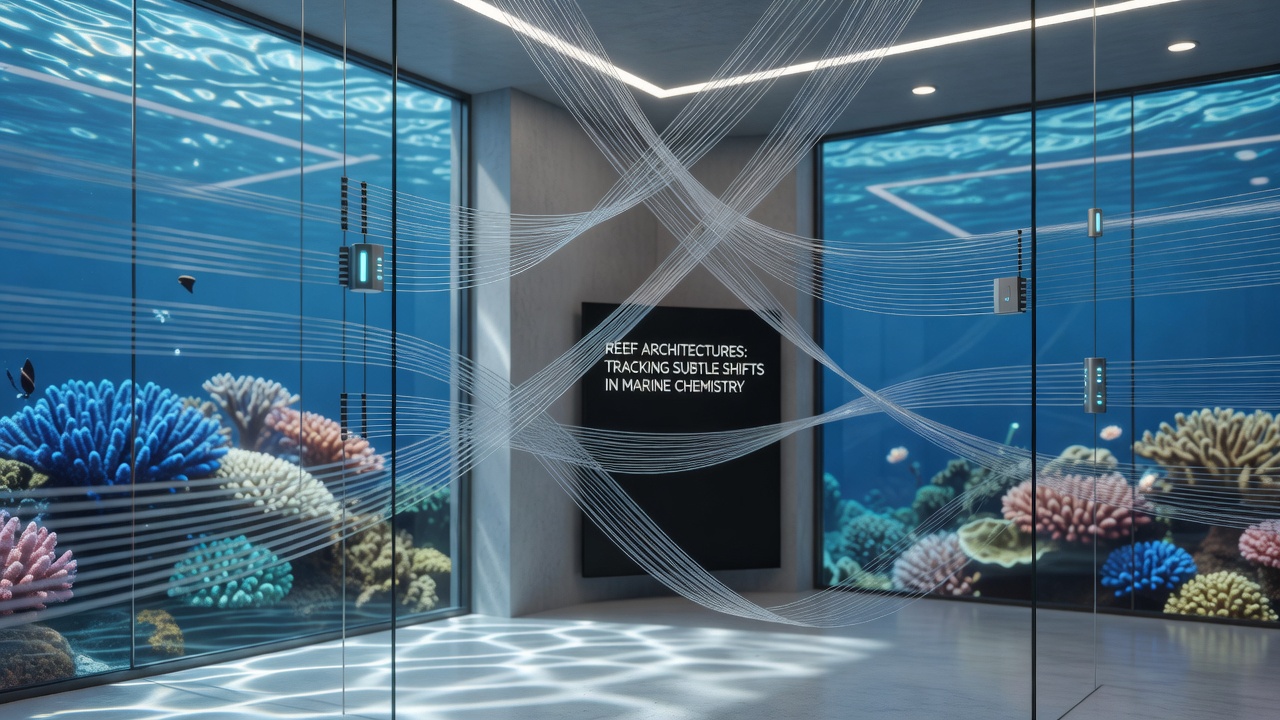
Coastal research stations in Australia have tested these systems along the Great Barrier Reef margins, where threads track carbonate chemistry fluctuations linked to seasonal upwelling events. The architecture allows modular expansion, so additional threads can be added without redesigning the entire framework, and this scalability has proven useful for covering larger monitoring zones over successive seasons. Industry reports from materials consortia highlight that the threads maintain calibration accuracy for periods exceeding 18 months before requiring maintenance interventions.
Developments Scheduled Through September 2026
Deployment schedules set for September 2026 include expanded arrays off the coast of British Columbia, where Canadian research vessels will install reef-architecture frames equipped with upgraded threads that incorporate real-time spectral analysis capabilities. These installations build on prior prototypes and aim to integrate with satellite-linked buoys for broader data sharing across international networks. Project documentation indicates that the new threads will sample at higher frequencies during critical periods such as algal bloom events, providing datasets that feed into predictive models used by fisheries management authorities.
European Union-funded initiatives have aligned parallel testing phases for the same timeframe, focusing on North Sea sites where chemistry shifts affect shellfish populations. Threads in these setups utilize adaptive routing protocols modeled on coral polyp interactions, rerouting signals around obstructed paths automatically. Records from preliminary trials show latency reductions of up to 30 percent compared with conventional mesh topologies.
Material and Data Handling Considerations
Thread construction typically layers aramid cores with conductive polymers and protective sheaths that mimic the protective mucus layers of coral polyps, and this composition allows flexibility without sacrificing electrical or optical performance. Data aggregation occurs at junction points designed to emulate coral nodes, where local processing filters noise before transmission to shore-based stations. Research papers from institutions including the University of Queensland describe algorithms that correlate thread readings with environmental metadata to isolate genuine chemistry anomalies from sensor drift.
Power delivery relies on hybrid systems combining piezoelectric elements that harvest energy from water movement with low-power radio modules, and reef architectures help position these elements to maximize exposure to consistent flow patterns. Maintenance logs from operational sites demonstrate that the distributed layout reduces the frequency of full-system retrievals, as individual branches can be serviced independently.
Conclusion
Reef architectures continue to influence the design of thread-based monitoring systems that capture subtle marine chemistry dynamics across extended timescales. Integration of these frameworks with existing ocean observation infrastructure supports expanded coverage and improved data fidelity, while ongoing deployments through 2026 will supply additional performance metrics. The approach remains grounded in observed natural structures and measured engineering outcomes rather than theoretical projections alone.